Posted on Leave a comment

Anthony Trollope

Anthony Trollope

Anthony Trollope (1815—1882) was an English novelist whose popular success concealed until long after his death the nature and extent of his literary merit. In his own time, Trollope’s novels were as popular with the common reader as they were admired by George Eliot, Henry James, George Bernard Shaw and Nathaniel Hawthorne. Today, he is probably the most widely read and loved nineteenth century English Novelists after Dickens and Jane Austen.

Anthony Trollope

Trollope grew up as the son of a sometime scholar, barrister, and failed gentleman farmer. He was unhappy at the great public schools of Winchester and Harrow. Adolescent awkwardness continued until well into his 20s. The years 1834–41 he spent miserably as a junior clerk in the General Post Office, but he was then transferred as a postal surveyor to Ireland, where he began to enjoy a social life. In 1844 he married Rose Heseltine, an Englishwoman, and set up house at Clonmel, in Tipperary. He then embarked upon a literary career that leaves a dominant impression of immense energy and versatility.

View now Anthony Trollope Books

Among the best-known of his novels are two series of six novels each collectively known as the Chronicles of Barsetshire and the Palliser novels, as well as his longest novel, The Way We Live Now. His novels address political, social, and gender issues and other topical matters.

Barsetshire Chronicles

A series of books set in the imaginary English county of Barsetshire remains his best loved and most famous work, but he also wrote convincing novels of political life as well as studies that show great psychological penetration. One of his greatest strengths was a steady, consistent vision of the social structures of Victorian England, which he re-created in his books with unusual solidity. The Barsetshire novels excel in memorable characters, and they exude the atmosphere of the cathedral community and of the landed aristocracy.

Palliser Novels

Trollope’s other major series, the Palliser novels, which overlap with the Barsetshire novels, concerned itself with politics, with the wealthy, industrious Plantagenet Palliser (later Duke of Omnium) and his delightfully spontaneous, even richer wife Lady Glencora featured prominently. However, as with the Barsetshire series, many other well-developed characters populated each novel and in one, The Eustace Diamonds, the Pallisers play only a small role.

Trollope published four novels about Ireland. Two were written during the Great Famine, while the third deals with the famine as a theme (The Macdermots of Ballycloran, The Kellys and the O’Kellys, and Castle Richmond, respectively). The Macdermots of Ballycloran was written while he was staying in the village of Drumsna, County Leitrim. The Kellys and the O’Kellys (1848) is a humorous comparison of the romantic pursuits of the landed gentry (Francis O’Kelly, Lord Ballindine) and his Catholic tenant (Martin Kelly). Two short stories deal with Ireland (“The O’Conors of Castle Conor, County Mayo” and “Father Giles of Ballymoy” Some critics argue that these works seek to unify an Irish and British identity, instead of viewing the two as distinct. Even as an Englishman in Ireland, Trollope was still able to attain what he saw as essential to being an “Irish writer”: possessed, obsessed, and “mauled” by Ireland.

Trollope’s popularity and critical success diminished in his later years, but he continued to write prolifically, and some of his later novels have acquired a good reputation. In particular, critics, who concur that the book was not popular when published, generally acknowledge the sweeping satire The Way We Live Now (1875) as his masterpiece. In all, Trollope wrote 47 novels, 42 short stories, and five travel books, as well as nonfiction books titled Thackeray (1879) and Lord Palmerston (1882).

In 1859 Trollope moved back to London, resigning from the civil service in 1867 and unsuccessfully standing as a Liberal parliamentary candidate in 1868. Before then, however, he had produced some 18 novels apart from the Barsetshire group. He wrote mainly before breakfast at a fixed rate of 1,000 words an hour. Outstanding among works of that period were Orley Farm (serially, 1861–62; 1862), which made use of the traditional plot of a disputed will, and Can You Forgive Her? (serially, 1864–65; 1865), the first of his political novels, which introduced Plantagenet Palliser, later duke of Omnium, whose saga was to stretch over many volumes down to The Duke’s Children (serially, 1879–80; 1880), a subtle study of the dangers and difficulties of marriage. In the political novels Trollope is less concerned with political ideas than with the practical working of the system—with the mechanics of power.

Discover Trollope – A guide to Britain’s celebrated Victorian author.

Starting in 1989 The Folio Society began publishing the first complete edition of Trollope’s novels and continued at the rate of several per year until all 47 novels had been published.

This superb uniformly bound complete collection is generally available on my website together with the edition that was later produced by the Folio Society for the Trollope Society.

View now Anthony Trollope Books

View now The Trollope Society Novels

Posted on 4 Comments

Franklin Library – The Ultimate Private Library

Franklin Library – The Ultimate Private Library

From the early 1970s until 2000, Franklin Library, a division of The Franklin Mint developed a following by providing beautifully bound editions that would not break the bank. Known for beautiful leather bindings, Franklin Library books were published in three styles, full genuine leather, imitation leather, and quarter bound genuine leather. The full leather bound editions were produced throughout the Library’s lifespan but the other two styles (imitation and quarter bound) were only published in the 1970s and ‘80s. For this reason all Franklin Library editions are now considered “out of print” and are no longer available for sale from the Franklin Mint.

The 100 Greatest Books of All Time series is among the most collectable Franklin Library collections. Published between 1974 and 1982, the heavily illustrated 100 Greatest Books of All Time collection features remarkable works by literature’s most legendary writers. Readers will find Charlotte Bronte, Ralph Waldo Emerson, William Shakespeare, Nathaniel Hawthorne, Goethe, Robert Frost, William Faulkner, Ernest Hemingway, Herman Melville and John Donne among the long list of greats. Along with each book subscribers received a brief reader’s guide commenting on the content of the book and its author, the design and illustration of the volume, and the enduring significance of the work in world literature.

All Editions were produced using high quality paper with pages that are sewn not glued into the binding and gold gilded page edges on all three sides. Raised spine bands give each book that distinctive antique look. The genuine full leather bound editions are the highest quality of the three. While most characteristics remained constant throughout the different series and years of production the style of end papers varied from silk moiré to decorative paper. The full genuine leather binding had 22k. gold lettering and stampings on the spine and covers and is the only edition that has the attached silk page marker.

This exclusive edition of “The 100 Greatest Books Of All Time” was privately printed and bound solely for those who subscribed to the complete collection. The books were never offered to the general public nor were they sold in bookshops and were not sold singly. This superb collection was published in a single Limited Edition.

Browse the books available at Franklin Library

Posted on Leave a comment

Raymond Chandler

Raymond Chandler

Raymond Chandler

Raymond Thornton Chandler (1888-1959) was born in Chicago, but moved to England with his family when he was twelve, where he attended Dulwich College, alma mater to some of the twentieth century’s most renowned writers. After attending preparatory school in London, he studied international law in France and Germany before returning to Britain and embarking on a literary career that produced, early on, mostly book reviews and bad poetry. However, he did manage to publish 27 of his poems, as well as a short story called “The Rose-Leaf Romance,” before returning to the States in 1912. He settled in California, worked in a number of jobs, and later married. It was during the Depression era that he seriously turned his hand to writing, and his first published story appeared in the pulp magazine Black Mask in 1933, followed six years later, when he was fifty, by his first novel, The Big Sleep. Chandler died in 1959, having established himself as the finest crime writer in America.

View Raymond Chandler books at Raymond Chandler

From 1896 to 1912 Chandler lived in England with his mother, a British subject of Irish birth. Although he was an American citizen and a resident of California when World War I began in 1914, he served in the Canadian army and then in the Royal Flying Corps (afterward the Royal Air Force). Having returned to California in 1919, he prospered as a petroleum company executive until the Great Depression of the 1930s, when he turned to writing for a living. His first published short story appeared in the “pulp” magazine Black Mask in 1933.

Raymond Chandler was the creator of the private detective Philip Marlowe, whom he characterized as a poor but honest upholder of ideals in an opportunistic and sometimes brutal society in Los Angeles.

Chandler completed seven novels, all with Philip Marlowe as hero: The Big Sleep (1939), Farewell, My Lovely (1940), The High Window (1942), The Lady in the Lake (1943), The Little Sister (1949), The Long Goodbye (1953), and Playback (1958). Among his numerous short-story collections are Five Murderers (1944) and The Midnight Raymond Chandler (1971). The most popular film versions of Chandler’s work were Murder, My Sweet (1944; also distributed as Farewell, My Lovely), starring Dick Powell, and The Big Sleep (1946), starring Humphrey Bogart, both film noir classics.

From 1943 he was a Hollywood screenwriter. Among his best-known scripts were for the films Double Indemnity (1944), The Blue Dahlia (1946), and Strangers on a Train (1951), the last written in collaboration with Czenzi Ormonde.

Crafting and Recrafting the Creations of Raymond Chandler

If you suspect that you may be on the verge of a midlife crisis, having reached your forties and still not really found what you want to do with your life (or perhaps being overwhelmed with a feeling that you haven’t yet reached your full potential) then you can take heart from the story of Raymond Chandler. Chandler was working as an company executive until the Great Depression struck America and he found himself without a job: it was only at that point, and at the age of 44, that he made the decision to become a detective fiction writer instead. His fame now is testament to the fact that that career was, of course, an incredible success.

Raymond Chandler was famed for his direct and sparse prose, with many of his contemporary critics struggling to see his great works as important literature. However that is exactly what they are: Incredibly important works that were incredibly well written, and it is only as time progresses that the magnitude of his contributions are to be fully understood. The influence that Chandler’s works had on American popular literature really shouldn’t be underestimated, nor should the fact that without his contribution, it is unlikely that the genre of hard boiled detective drama would even exist.

The Craft of Writing

Despite starting his career writing what he himself believed to be ‘trash fiction’ in order to make a quick buck, Chandler was truly devoted to the craft of writing, and to honing that craft in order to become the best writer he could possibly be. Chandler worked hard at crafting and recrafting his work. His brutal and simplistic prose was no doubt the result of his meticulous reediting process, as he himself once wrote: “A good story cannot be devised; it has to be distilled. I always regard the first draft as raw material. What seems to be alive in it is what belongs in the story.” Writing didn’t always come naturally to him, and when he found that he was suffering from writer’s block Chandler turned to drink, believing that it helped to cure his writers block and become a better writer: of course, this was far from true.

Whilst he was committed to crafting his works, Chandler didn’t write in a conventional way: there was never a draft, a plan, or even a plot line to follow, he simply started writing letting the characters and stories evolve themselves on the page. This risky writing strategy only worked so well because of Chandlers sheer determination to create, the write, to succeed. When pitching to an audience, Chandler came into his own: he made his creation process seem so effortless. His private letters reveal though that this was far from the case: that everything he crafted mattered to him deeply and he fought hard, within himself, to create.

The Art of Drinking

Whilst he was committed to recrafting his works, Chandler found that he was unable to recraft himself. Unfortunately, like many of the nation’s greatest writers, Chandler’s life was not untinged by tragedy and by trials and tribulations: namely, the author’s rampant alcoholism. With the support of friends, Chandler spent many years in and out of professional health facilities in order to receive treatment and rehabilitation for his alcoholism, however, although he had periods of sobriety, it was an illness that the writer never overcame. When his beloved wife died in 1954, Chandler was truly heartbroken, and it was at this point that his rampant alcoholism reached the point of no return. He began to really suffer with the clinical depression that had tinged much of his adult life, and in 1955 even attempted suicide, although this was seen as an obvious cry for help rather than a genuine attempt to end his life (given that he had called the police before the attempt so that they would be able to find him in time). Although he continued to keep writing throughout this difficult period of alcoholism, the works Chandler was producing at this time were markedly substandard when compared to his earlier novels. Chandler ultimately succumbed to illness (no doubt induced by his alcohol addiction) and died in 1959. In his best loved works however, Chandler lives on.

This article is by courtesy of Helen Salter

View Raymond Chandler books at Raymond Chandler

Posted on Leave a comment

A Family Prone To Death – The Brontes

A Family Prone To Death – The Brontes

Spare a thought for Patrick Bronte, priest of Haworth in Yorkshire from 1820 until his death in 1861. Patrick lived until the age of 84 – really quite an old age in comparison to most other Victorians – and in those years he buried not only his wife, but every single one of his children. This is a circumstance which every father would shudder to consider – but this was Victorian Yorkshire, and people died all the time. Not all of these people, however, were Brontes, and not all of them would ‘live on’ through the body of literature they left behind. While their physical forms of the Brontes passed away very quickly, the literary lives of the Bronte sisters have endured for centuries.

Inherently Weak?

To our modern eyes, it may well seem that there was a congenital weakness within the Bronte genepool, presumably inherited from their mother’s side. Marie Bronte, the mother of the remarkable writers and their brother, Branwell, died at the age of 38 – setting a pattern which her children would follow. At the time, it was thought that she died of tuberculosis, although medical experts now speculate that she may have suffered from uterine cancer. She was followed in a few years by her eldest daughters, Maria and Elizabeth, who contracted tuberculosis at their boarding school and died before reaching their teenage years. These deaths were certainly tragic, but not particularly unusual for Victorian Britain. This was an era before the NHS, before widespread and systemic medical knowledge, and before the option of health insurance became available for the truly health-conscious. Those who fell ill (even from curable diseases) were in danger of their lives, and women – partly due to the risks of Victorian childbirth, and partly due to the plates of sons and husbands being piled higher when it came to mealtimes than those of daughters and wives – tended to die younger than men. This fact did not, however, save the unfortunate Marie’s son – Branwell – who became the third Bronte sibling to succumb to tuberculosis some twenty years later, at the age of 31.

Mortal Influences

While such deaths may have been expected for a Victorian family, this did not mean that the sisters were unaffected by the loss of their loved ones. Indeed, the Bronte sisters appear to have been profoundly affected by the untimely demise of their siblings and mother – so much so that the strong feelings and symbolism inspired by these deaths permeates their work, inspiring both passion and tenderness by degrees. Most directly, the death of Maria is said to have influenced the character and death of the saintly Helen Burns in Charlotte Bronte’s turbulent masterpiece ‘Jane Eyre’. More obliquely, the enjoined themes of mortality and eternity run through the Bronte canon – particularly within the single, incredible novel of Emily Bronte, ‘Wuthering Heights’. Alas, Emily did not long outlive her brother.

The Curse Of The Brontes

By the time they approached their thirties, the remaining Bronte sisters – Emily, Anne, and Charlotte – had begun to carve considerable literary careers for themselves. In 1846, under the male pseudonyms Currer, Acton, and Ellis Bell, the sisters had published poems. In 1847, each sister had a novel – ‘Jane Eyre’ for Charlotte, ‘Agnes Grey’ for Anne, and ‘Wuthering Heights’ for Emily – published. ‘Jane Eyre’ received great acclaim, and ‘Agnes Grey’ was praised. The more prudish critics were shocked at the simmering passions and ‘immorality’ of ‘Wuthering Heights’, but all agreed that it was masterfully and beautifully written. ‘Wuthering Heights’ was ahead of its age – it is now considered one of the greatest literary efforts of all time. Alas, modern lovers of Emily’s work were to be denied anything else from her pen. In 1848 she sickened and died, carried off by the same disease which had killed her siblings and possibly her mother – the curse of the Brontes, tuberculosis. A tantalising legend holds that Emily Bronte was working on a second novel at the time of her death and that this, like its author, met an untimely end when Charlotte Bronte burned it. Given the passionate nature of her previous work, and the way in which the critics had treated it, it is possible that Charlotte – seeing the same emotional intensity within the new novel – burned it to save her sister from being dragged through the jaws of the critics after death. If this is the case it is a great shame, for time would almost certainly have rectified the public’s opinion of Emily’s writing, just as it did with ‘Wuthering Heights’.

The Death Of Anne

Anne and Charlotte were now the last of the Bronte siblings left alive – and Anne did not have long for this world. Anne’s work was not as popular as Charlotte’s, nor as widely discussed as Emily’s during her own time – but has since received critical acclaim not only for the skill of her writing but for her refusal to romanticise male brutality. She was arguably the greatest feminist of this undeniably feminist family, refusing to obfuscate the dark realities of Victorian male-female relations with the glamor of brooding sexuality. During her short life, she managed to publish two books – ‘The Tenant Of Wildfell Hall’ and ‘Agnes Grey’ – but sickened shortly after the death of Emily, and declined rapidly thereafter. Determined that the sea air would be good for her lungs, Anne Bronte had herself taken by donkey cart to Scarborough. However, she died at the age of 29 in 1849, and is buried in Scarborough. She, too, had succumbed to pulmonary tuberculosis.

The Death Of Charlotte

That left just Charlotte Bronte to grieve with the ageing Patrick. Charlotte is a sometimes controversial figure among Bronte lovers. As mentioned, she is thought to have burned Emily’s second novel, and she suppressed the publication of ‘The Tenant Of Wildfell Hall’ after Anne’s death for motives which she took to the grave. However, her love for her sisters is not in doubt, and seeps into her writing at many points. ‘Shirley’ – not critically acclaimed and rarely thought of these days – was written as a manner of coping with Anne’s death. She went on to publish the novel ‘Villette’ in 1853, much of which is probably inspired by her own oft-expressed but unrequited love for a married professor in Belgium. She ultimately married her father’s curate, but it seems that Charlotte did so out of a sense of womanly duty rather than much love on her part. She soon fell pregnant, opening up the possibility that a new grandchild could once more fill the depleted family life of poor Patrick – but, sadly, the weakness of the Brontes caught up with poor Charlotte. She died in 1855 at the age of 38, and her unborn child died with her. She was initially thought, like her siblings, to have fallen prey to tuberculosis – but is now considered to have suffered and died from extreme morning sickness, the same condition with which the Duchess of Cambridge was hospitalised with while pregnant with Prince George in 2013.

Patrick Alone

Patrick Bronte had come tantalisingly close to seeing his family proceed into the third generation. To lose both his final child and his first grandchild at once must have been a terrible blow. Patrick, by now very elderly, poured the rest of his life into helping Elizabeth Gaskell with a biography of his daughter Charlotte, and saw to the posthumous publication of Charlotte’s first, rejected novel, ‘The Professor’. His widowed son in law stayed with him until his death, and it can only be hoped that this man and the comforts of his daughters’ literary afterlife provided the last living Bronte with some solace.

This article is by courtesy of Helen Salter

Find more at The Novels of the Sisters Bronte

Browse all my books at Hcbooksonline

Posted on Leave a comment

The Madness and Modernism of Virginia Woolf

The Madness and Modernism of Virginia Woolf

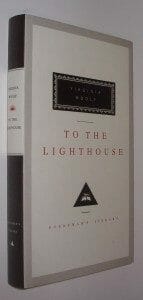
Virginia Woolf was a prolific author and one of the most important modernists of the early twentieth century. She was also one of the most famously mentally unwell writers of the same period, with her personal life attracting nearly as much attention as her works.

Whilst her battle with the depression and other mental health conditions that ultimately drove her to suicide have been well documented, what is less well known is that Virginia Woolf also battled with substance abuse. Woolf was a regular user of the class A drug chloral (commonly used at the time to treat insomnia and known for the sedated and hypnotic state it left its users in). Woolf referred to the drug as “that mighty prince with the moth’s eyes and the feathered feet.” All of these factors, which are often referred to as ‘the madnesss of Virginia Woolf’, greatly influenced her works.

The Language of Madness

What is interesting is that, despite her obvious innovative writing skill, Woolf never saw herself as a professional writer, instead viewing her writing as an outlet, a function to help her control and process her mental health problems. She therefore was never really writing for an external audience as much as for herself, something that is occasionally very apparent within her works. The theme of madness,  of sanity and insanity, runs like a thread through all of Woolf’s works, particularly her most famous piece Mrs Dalloway. The fury of her depression and her bi polar disorder governed Virginia Woolf’s life and her need to write was, above all else, a need to make sense of the chaos of her mind and demonstrate some semblance of control over her psyche. Woolf was truly troubled, in every sense of the term, and her works demonstrate this very clearly, with madness and mental confusion bubbling below the surface in every novel that she creates. The language used within her works also repeatedly and insistently raises questions about the very origins of language, as well as the linguistic connection with madness and suicide.

The Writing Cycles of A Manic Depressive

Many of her works were written during cycles of depression and mania, although Woolf herself admitted that she was a much more productive writer during her periods of depression, which no doubt explains why this remains the dominate theme of any mental health discussions within her works.  The YearsThree Guineas and Between the Acts were all written in spurts and starts before she succumbed to her depression and the writing stopped. It’s important to remember that as well as being a modernist, Woolf was also a late Victorian, and these Victorian influences are also included in her works, with To The Lighthouse being a focus and critique of the imbalance of the typically Victorian relationship between her deceased parents; a huge contrast to the equal and equally worthy relationship that she strived to have with her husband Leonard, who himself battled with mental illness in the form of depression. The death of her parents had a huge impact on the young Woolf, and is thought to be the trigger that led to Woolf’s first suicide attempt and her first experience of manic depression. One biographer of Woolf was keen to point out that Woolf was not an insane individual, but a sane person who suffered with a mental illness. Perhaps it is this sanity that lead to Woolf’s self-awareness about her condition and her preoccupation with including it in her works.

The modernist style of Woolf’s work changed and evolved, becoming more and more sophisticated with each subsequent novel that she produced. She was at the center of a literary revolution, a position she both relished and simultaneously found pressurised and uncomfortable. Reading Woolf’s works is like a lesson in well written modernism: they also reveal so much about her psyche, and their almost autobiographical nature have fascinated readers for generations. When viewed in conjunction with her diaries and letters (Woolf was a prolific letter writer and journal reader) it is possible to really create a full picture of the author that can enhance and deepen the experience of reading Woolf’s unique modernist works.

This article is by courtesy of Helen Salter

Search for books by Virginia Woolf at Virginia Woolf Books

Browse all my books at Hcbooksonline

Posted on Leave a comment

Tempestuous Victorians: How the Romantic Resonances of the Brownings Fuel an Eternal Fascination

Tempestuous Victorians: How the Romantic Resonances of the Brownings Fuel an Eternal Fascination

His poetry is defiantly sordid, anguished, and repressed; beneath the lines linger a simmering sense of devilishness which is almost seductive in its intensity, reined in only by form and carefully-calculated conceit. Browning – renowned for his place in the literary fiction canon among the Victorians and his relationship with another icon, Elizabeth Barrett Browning – continues to be revered for his prowess in wit, character, dark humour and social commentary. But Browning’s own achievements have often paled to those of his mistress, muse, and wife – a poet who revolutionized Victorian literature while echoes of Romanticism brooded in her rhetoric.

Together, both Brownings produced some truly memorable and definitive works; Browning’s perhaps alarmingly, potentially-biographical “My Last Duchess” and Barrett Browning’s empowering Aurora Leigh have made their way into the syllabi of virtually every academic institution featuring an English literature programme. But it is the mystery and allure of the poets themselves which entice curiosity, even more than a century and half later – perhaps overshadowing their very works as is often the case.

Victorian Excess

While many Victorian literary circles fully-embraced the “carpe diem” mantra – particularly the fin de siècle in later years – the Brownings were not especially hedonistic; many writings verged more on the philosophical nature of morality, society, and critiques of Victorian archetypes. Yet the writers continue to fill the image of the tormented artist, particularly Barrett Browning’s tragic and untimely death (which some even theorize to be at the hands of her husband) and her dependency on opium. Of course, the mere mention of this potent substance immediately conjures up the decadent and hallucinogenic imagery of Victorians cavorting or being transported into the throes of artistic inspiration, as it is commonly romanticized by so many in relation to writers both contemporary and past. But Barrett Browning’s fixation on the drug played a very small role on her creative output. Instead, it was used as a coping alternative for her ailing health, and while she spoke of it like a love affair, Barrett Browning’s words “so far, that life is necessary to writing, & that I should not be alive except by help of my morphine” clearly indicate to what extent she relied on the drug.

The Brownings would relocate to Italy for the purpose of improving Barrett Browning’s health. Sadly, she died in 1861, her death having devastating effect on Browning. Browning’s poetry would continue to be received, however – not only because of its religious influences and allusions to Milton and Dante, but the power it would have to captivate the minds of Edgar Allan Poe and Emily Dickinson. Certainly, the themes covered in much of both Brownings’ works would add to their mystique. And as with all “celebrity pairings”, critics and fans alike have delved into the many-layered verses to decipher not only the social and spiritual resonances but the relationship between the two visionaries as well.

Defiant Spirit

Like many poets of the period, the Brownings were highly attuned to the social condition of those around them. Barrett Browning in particular focused on American slavery in her poem “The Runaway Slave at Pilgrim’s Point” and child abuse and labour in “The Cry of the Children”, urging strong criticisms by those who felt that, as a woman, she was stepping out of her depth. Her husband’s commentary through poems like “Fra Lippo Lippi” and “Childe Roland” would examine the idea of art and poetry as prophecy, as well as its potential for psychological insight through exploring different settings and circumstances (both in literal and figurative form). In many ways, Browning and Barrett Browning alike exhibited a kind of otherworldlyness distinct from contemporaries, though almost a hybrid the mystical nature of works by Tennyson and the more critical, focused material of Matthew Arnold. As poets and prophets, the Brownings succeeded in that balance which tilts on the brink – and becomes fully submerged at times – with another plane of thought, while maintaining an astute eye on the social implications of change, especially regarding human rights, labour, industry, and politics.

Ultimately it is the writings of the Brownings themselves which reveal most about their lives and perhaps confuse, enlighten, bewilder, and entice the reader even more – and perhaps we will never truly understand or disclose the underlying secrets of one of literature’s most powerful couples. But this is exactly what keeps us coming back – to wonder at the strange lives of these brilliant individuals, and be ever enthralled by the masterpieces they have left behind.

This article is by courtesy of Helen Salter

Search for books by the Brownings at Robert & Elizabeth Browning Books

Browse all my books at Hcbooksonline

Posted on 3 Comments

D H Lawrence Collected Editions

D H Lawrence Collected Editions

There are three major collected editions of the works of D H Lawrence.

The first of these is the The Works of D. H. Lawrence “Phoenix Edition” in 26 Volumes published by William Heinemann (1955-), London with the volumes uniformly bound in red cloth.

This 26 volume edition contains;
The White Peacock; The Trespasser; Sons and Lovers; The Rainbow; Women in Love; The Lost Girl; Aaron’s Rod; Kangaroo; The Plumed Serpent; First Lady Chatterley; Lady Chatterley’s Lover; Apocalypse; Twilight in Italy (Travel I); Sea and Sardinia (Travel II); Mornings in Mexico & Etruscan Places (Travel III); The Short Novels (2 volumes); The Complete Short Stories (3 volumes); The Complete Poems (3 Volumes); Phoenix: The posthumous papers of D.H.Lawrence (2 volumes); Boy in the Bush (Skinner, M.L., Lawrence, D. H.)

——————————————————————————————–

The second of these is The D H Lawrence Collection published in 24 volumes in the late 1970’s by Heron Books.

This 24 volume edition contains;
The White Peacock; Sons and Lovers; The Rainbow; Women in Love; The Lost Girl; Aaron’s Rod;
Kangaroo; The Plumed Serpent; Lady Chatterley’s Lover; Twilight in Italy, Sea and Sardinia;
Mornings in Mexico, Etruscan Places, The Trespasser (also seen as Short Novels III); Short Novels (2 volumes); Short Stories (3 volumes); Poems (2 volumes); Plays; Phoenix Part (2 volumes); Letters (2 volumes); Studies in Classic American Literature and Fantasia of the Unconscious.
——————————————————————————————–
The third of these is the scholarly edition of Lawrence´s works, The Cambridge Edition of the Works and Letters of D. H. Lawrence in 44 Volumes (36 Volumes Works + 8 Volumes Letters) Cambridge University Press, publication began in the 1980s.


This edition contains;

The White Peacock; Sons and Lovers; The Rainbow; The First Women in Love; Women in Love
The Lost Girl; Aaron’s Rod; Kangaroo; The Plumed Serpent; The First and Second Lady Chatterley Novels; Lady Chatterley’s Lover and A Propos of ‘Lady Chatterley’s Lover’;
Mornings in Mexico and Other Essays; Sea and Sardinia; Sketches of Etruscan Places and Other Italian Essays; Twilight in Italy and Other Essays; The Prussian Officer and Other stories; England, My England and Other Stories; St Mawr and Other Stories; Mr Noon
The Boy in the Bush; The Fox, The Captain’s Doll, The Ladybird; Reflections on the Death of a Porcupine and Other Essays; Love Among the Haystacks and Other Stories; The Trespasser; The Woman Who Rode Away and Other Stories; The Virgin and the Gipsy and Other Stories
The Vicar’s Garden and Other Stories; Paul Morel; Quetzalcoatl; Late Essays and Articles; The Poems (2 Volumes); The Plays; Introductions and Reviews

View D H Lawrence books at Heron Books

Posted on Leave a comment

The Works of D H Lawrence

The Works of D H Lawrence

David Herbert Lawrence (1885-1930), was an astonishingly versatile and prolific writer, being a novelist, storywriter, critic, poet and painter, and one of the greatest figures in 20th-century English literature.His modernist works reflect on modernity, social alienation and industrialisation, while championing sexuality, vitality and instinct. Four of his most famous novels – Sons and Lovers (1913), The Rainbow (1915), Women in Love (1920), and Lady Chatterley’s Lover (1928) – were the subject of censorship trials for their radical portrayals of romance, sexuality and use of explicit language.

View D H Lawrence books at D H Lawrence

His list of publications runs to well over 100 titles, a remarkable tally for a man who died in his mid-Forties. His poetry is of a high order, “Snake” and “How Beastly the Bourgeoisie is” are probably his most anthologized poems, and his plays are still occasionally performed and not merely as curiosities. However it is as a prose writer that he is best known, and rightly so, he was a master of all forms of fiction, equally at home with the short tale and novella as with the full length novel. It is these works that are most often read today, and form the core of his remarkable body of writing.
David Herbert Lawrence was born on September 11th 1885, the fourth child of miner Arthur and teacher Lydia who constantly criticised her husband’s heavy drinking and bad language. The young David observed well, and the couple’s difficult relationship is explored in the magnificent Sons and Lovers (1913), and his play A Collier’s Friday Night.

Lawrence wrote some of his most thoughtful, angry, and beautiful books after the First World War, most notably Women in Love (1920), which is something of a sequel to The Rainbow (1915). In 1921 came several essays and travel pieces for various magazines, and journals. 1922 saw the publication of Aaron’s Rod, which show the influence of Nietzsche, followed by his finest collection of short stories, England My England. The following year saw publication of his most disturbing novel, Kangaroo (1923), which in essence is an essay on the power, and appeal of fascism. He also published a collection of wonderful poetry, Birds, Beasts and Flowers. The Plumed Serpent (1926), written while living in the US sate of New Mexico, was a vivid evocation of Mexico and its ancient Aztec religion. The Man Who Died (1929), is a bold story of Christ’s Resurrection.

His collected works, among other things, represent an extended reflection upon the dehumanising effects of modernity and industrialisation. In them, some of the issues Lawrence explores are emotional health, vitality, spontaneity and instinct.

Lawrence wrote almost 800 poems, most of them relatively short. His first poems were written in 1904 and two of his poems, “Dreams Old” and “Dreams Nascent”, were among his earliest published works in The English Review. Lawrence rewrote some of his early poems when they were collected in 1928. This was in part to fictionalise them, but also to remove some of the artifice of his first works. His best-known poems are probably those dealing with nature such as those in the collection Birds, Beasts and Flowers, including the Tortoise poems, and “Snake”, one of his most frequently anthologised, displays some of his most frequent concerns: those of man’s modern distance from nature and subtle hints at religious themes.

Lawrence’s opinions earned him many enemies and he endured official persecution, censorship, and misrepresentation of his creative work throughout the second half of his life, much of which he spent in a voluntary exile. At the time of his death, his public reputation was that of a pornographer who had wasted his considerable talents. E. M. Forster, in an obituary notice, challenged this widely held view, describing him as, “The greatest imaginative novelist of our generation.”

View D H Lawrence books at D H Lawrence