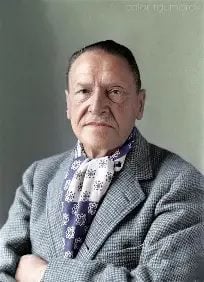
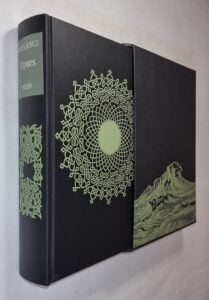
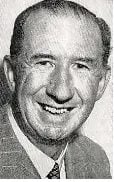
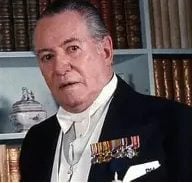
W. Somerset Maugham (1874–1965) stands as one of the most widely read and enduring English writers of the twentieth century, a master craftsman whose clarity of style, sharp psychological insight, and worldly sensibility earned him both popular acclaim and critical respect. Emerging in an era marked by modernist experimentation, Maugham forged a distinctive path: he privileged narrative over abstraction, character over theory, and emotional truth over stylistic novelty. His prose, elegant, lucid, and deceptively simple, made him accessible to millions while concealing a sophisticated command of structure and tone.
Maugham’s own life, shaped by early loss, medical training, extensive travel, and clandestine wartime service, provided the rich material that permeates his fiction. Novels such as Of Human Bondage and The Razor’s Edge reveal a deep preoccupation with human weakness, the search for meaning, and the tension between desire and duty. His short stories, many set in the far-flung outposts of the British Empire, exhibit his unrivalled gift for narrative economy and ironic revelation. Works like “Rain,” “The Outstation,” and “The Letter” exemplify his talent for exposing the fragile facades of social respectability and the complexity of moral choice.
Critics have often noted Maugham’s stance as a detached observer. With the cool eye of a clinician, perhaps a legacy of his medical background, he dissected human behaviour with precision, yet without denying his characters’ vulnerability or dignity. He understood the contradictions of the human heart and portrayed them without sentimentality or judgment.
While never fully embraced by the modernist canon, Maugham’s reputation has endured due to the lasting pleasures of his storytelling and the universality of his themes. His works continue to resonate because they illuminate, with honesty and irony, the ordinary struggles of people striving to live meaningful lives. In a literary age that often prized obscurity, Maugham remained committed to the art of clear, compelling narrative—and it is this commitment that secures his place among the great storytellers of English literature.
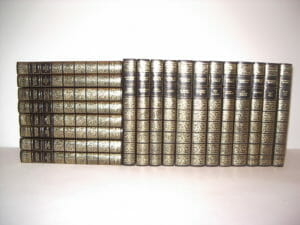
One of the most popular Maugham collections was produced by Heron books through the 1960’s and 1970’s you can view a full list for this collection at Heron Books Collections
John Galsworthy (1867–1933) stands as one of the most distinguished figures in early twentieth-century English literature—a novelist, playwright, and essayist whose work helped define the moral and social conscience of his age. Galsworthy’s ancestral heart was in Devon. He was intensely interested in his own origins and descent through a long line of Devon farmers. It was to Devon that he traced his rural forebears, and Galsworthy found sanctuary from the pressures of life in London high society. He also found a creative space in which his imagination could roam and he could craft his classic series of novels.
Best known for The Forsyte Saga, Galsworthy devoted his writing to exploring the tensions of a society in transition: the slow decline of Victorian certainties, the rise of modern sensibilities, and the friction between individual desire and the rigid structures of class, property, and convention. At its heart, The Forsyte Saga follows the fortunes, conflicts, and transformations of the Forsytes, an upper-middle-class English family whose wealth is rooted in commerce and property. The story spans several decades—from the Victorian era into the early 20th century—and uses the family’s experiences to explore: Possession and ownership; Marriage, love, and social convention; The shifting values of English society; The decline of rigid Victorian moral codes. The saga’s main early conflict centres around Soames Forsyte, a cautious, status-minded solicitor, and his beautiful but emotionally distant wife Irene Heron. Their troubled marriage becomes a symbol of the tension between materialism and emotional freedom. The Forsyte Saga provides both a detailed social portrait of its era and a psychological study of characters caught between tradition and change. It’s praised for its elegant prose, sharp social criticism, and rich, interwoven storytelling.
A master of subtle psychological insight, Galsworthy wrote with quiet realism rather than flamboyant flourish. His prose is marked by measured clarity, gentle irony, and a deep compassion for human frailty. As a dramatist, he challenged social injustice—campaigning against prison abuses, inequality, and the oppression of women—while in his fiction he produced some of the English canon’s most memorable portraits of the middle and upper-middle classes, caught between tradition and change.
Awarded the Nobel Prize in Literature in 1932, Galsworthy remains a writer of moral depth and narrative elegance, whose work reveals the complexities of human motives and the often-unspoken tragedies of ordinary lives.
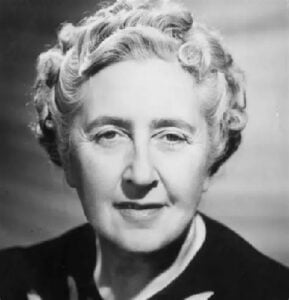
Agatha Christie, often hailed as the “Queen of Crime,” is one of the most prolific and celebrated authors in the world of mystery and detective fiction. Born in 1890 in Torquay, England, Christie wrote over 66 detective novels, 14 short story collections, and several plays, captivating readers with her keen insight into human nature and her intricate plots. Her works have been translated into over 100 languages and have sold billions of copies, cementing her as one of the best-selling authors of all time.
Christie had long been a fan of detective novels, having enjoyed Wilkie Collins’s The Woman in White and The Moonstone, and Arthur Conan Doyle’s early Sherlock Holmes stories. She wrote her first detective novel, The Mysterious Affair at Styles, in 1916. It featured Hercule Poirot, a former Belgian police officer with “magnificent moustaches” and a head “exactly the shape of an egg”, who had taken refuge in Britain after Germany invaded Belgium. Christie’s inspiration for the character came from Belgian refugees living in Torquay, and the Belgian soldiers she helped to treat as a volunteer nurse during the First World War. In her autobiography Agatha reveals a regret about the character; she wished she had not made him a retired police officer as by the time the series of books in which he appeared has concluded his age in reality would have been well in excess of 100 years old.
Agatha Christie Collection – Hamlyn
Her first husband was Archibald Christie; they married in 1914 and had one child before divorcing in 1928. Following the breakdown of her marriage and the death of her mother in 1926, she made international headlines by going missing for eleven days. Christie disappeared from her home in Sunningdale on 3 December 1926. The following morning, her car, a Morris Cowley, was discovered at Newlands Corner in Surrey, parked above a chalk quarry with an expired driving licence and clothes inside. On 4 December, the day after she went missing, it is now known she had tea in London and visited Harrods department store where she marvelled at the spectacle of the store’s Christmas display. On 14 December 1926, she was located at the Swan Hydropathic Hotel in Harrogate, Yorkshire, 184 miles (296 km) north of her home in Sunningdale
During both world wars, she served in hospital dispensaries, acquiring a thorough knowledge of the poisons that featured in many of her novels, short stories, and plays. Following her marriage to archaeologist Max Mallowan in 1930, she spent several months each year on archaeological excavations in the Middle East and used her first-hand knowledge of this profession in her fiction. Despite her immense success, she was known for her modesty and reclusive nature, often shying away from the public eye.
Christie’s most famous characters, Hercule Poirot and Miss Marple, have become iconic figures in detective fiction. Poirot, the meticulous Belgian detective with his “little grey cells,” and Miss Marple, the sharp-witted amateur sleuth from the quiet village of St. Mary Mead, embody the contrast between methodical reasoning and intuitive insight. Through these characters, Christie explored complex themes such as justice, morality, and the darker aspects of human behaviour, all while maintaining a suspenseful and entertaining narrative.
Her writing style is known for its crisp dialogue, clever misdirection, and masterful plotting. Christie had a remarkable ability to create seemingly unsolvable mysteries that left readers guessing until the very end. Her works have inspired countless adaptations for film, television, and stage, ensuring her legacy endures in popular culture.
Whether you’re a seasoned fan or a newcomer to her work, reading Agatha Christie is always an invitation to solve the puzzle before the detective does, a challenge few can resist.
Thomas Hardy (1840–1928) is one of the most significant and influential figures in English literature, known for his richly detailed novels and poems that grapple with themes of fate, human suffering, and the indifference of nature. His works offer a stark, yet poignant, exploration of the complexities of rural life in Victorian England, and they provide a deep commentary on the constraints of social and moral systems. Hardy’s blend of realism, naturalism, and elements of romanticism made him a literary figure ahead of his time.
Born in the village of Higher Bockhampton in Dorset, Hardy grew up deeply influenced by the natural world and rural traditions. His early exposure to the landscape of southwestern England, as well as his upbringing in a working-class family, shaped much of his later writing. Hardy’s formal education was at local schools and later at King’s College London, where he studied architecture. However, it was his passion for writing that eventually led him to literary success. Hardy’s early works were influenced by Romantic poets like Wordsworth and Byron, but his mature works, especially his novels, were informed by his keen observations of the harsh realities of life, much influenced by the rise of industrialization and the changing social landscape.
Hardy’s novels are often set in the fictional region of Wessex, a rural landscape that mirrors his own southwest England. Through this setting, he explores the intersection of human will and the indifferent forces of nature, fate, and society. His characters frequently face immense personal struggles, whether due to the constraints of class, gender, or social expectations. His portrayal of women, often strong-willed and tragic figures, and his critique of Victorian morality are central to many of his works. Some of his major novels include; Tess of the d’Urbervilles, Far from the Madding Crowd, The Mayor of Casterbridge, and Jude the Obscure – Hardy’s last novel.
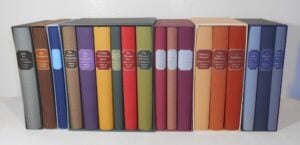
Thomas Hardy – Folio Society
In addition to his novels, Hardy was a prolific poet, and many of his poems reflect the same themes of fatalism, love, loss, and the passage of time. His poetry often expresses a deep melancholy about the human condition and its relationship with nature. Some of his most famous poems include; “The Darkling Thrush” and “The Convergence of the Twain,” which mourn the tragic sinking of the Titanic.
Hardy’s early novels were written within the conventions of Victorian realism, but as his career progressed, his work took on a darker, more naturalistic tone. He was deeply critical of the rigid moral codes and social systems of the time, often portraying characters caught in webs of fate or social injustice that they could not escape. Hardy’s distinctive narrative voice, which blends humour with a deep sense of sorrow, and his vivid descriptions of the English countryside, set his works apart from those of his contemporaries.
In his later years, Hardy became disillusioned with the novel as a form and turned more fully to poetry, writing hundreds of poems after the publication of Jude the Obscure. Hardy’s works were not universally appreciated in his time—his criticisms of social conventions and his unflinching portrayal of human suffering often shocked Victorian sensibilities. However, his influence grew steadily in the 20th century, and his works were lauded for their psychological depth and moral complexity.
Today, Hardy is considered one of the great English novelists and poets, whose works continue to resonate with readers for their exploration of the darker sides of human experience. His themes of love, loss, fate, and the inexorable march of time remain timeless, ensuring his place as a master of the Victorian era and beyond. His literary career spanned the transition from the Victorian era to the modern period, and his works captured the shifting tides of society, morality, and individual agency. His portrayal of rural life, complex characters, and fatalistic themes continue to captivate readers, cementing his legacy as one of the defining authors of English literature.
James Joyce (1882-1941) is one of the most influential and innovative writers of the 20th century. Renowned for his complex and experimental use of language, his works challenge conventional narrative forms and explore the intricacies of human consciousness. Joyce’s writing often blurs the boundaries between reality and perception, employing stream of consciousness techniques, intricate wordplay, and dense allusions to mythology, history and literature.
Born in Dublin, Ireland, Joyce’s experiences in his home city profoundly shaped much of his work. His most famous novels, A Portrait of the Artist as a Young Man (1916), Ulysses (1922), and Finnegans Wake (1939), reflect his ongoing exploration of identity, self-expression, and the relationship between the individual and society. In particular, Ulysses is celebrated for its groundbreaking narrative style and its deep engagement with the ordinary lives of Dublin’s citizens, all while drawing on the epic structure of Homer’s Odyssey.
Ulysses – Folio Society
Joyce’s writing also reflects a preoccupation with the tensions between modernity and tradition, especially in the context of Irish culture and politics. His works are often infused with a sense of disillusionment and a questioning of the Catholic and nationalist ideologies that dominated his homeland.
Although his works were initially met with controversy due to their explicit content and unconventional style, Joyce’s reputation has only grown over time. His innovations in narrative technique, especially in Ulysses, made him a key figure in the modernist movement and earned him a lasting place in the literary canon. Today, Joyce’s works continue to be studied and admired for their linguistic inventiveness and philosophical depth.
The James Joyce Centre is an educational charity, museum, and cultural institution which promotes the life, literature and legacy of one of the world’s greatest writers, James Joyce. Situated in a stunning Georgian townhouse in Dublin’s North Inner City, the Centre offers visitors historical and biographical information about James Joyce and his influence upon the literary world. We host walking tours, exhibitions, workshops, and lectures for Joycean scholars as well as the casual visitor. See the door of the famous No. 7 Eccles Street from Ulysses, art exhibitions, and other items that bring the author and his works to life. Participate in our many events, including readings, adaptations, and performances of Joyce’s best loved works.
Nevil Shute (1899-1960) – Nevil Shute Norway holds a distinguished place in twentieth century English fiction. An aeronautical engineer by profession and a novelist using Nevil Shute as his pen name, he spent his later years in Australia. his novels, written in clear and unaffected prose, reveal an abiding faith in the dignity of ordinary people and in the enduring values of decency, courage, and perseverance.
Heron Books Collection
Born in 1899 and trained as an engineer, Shute spent the first part of his life immersed in the world of aviation. His technical expertise and disciplined mind shaped his literary style: his narratives are structurally sound, meticulously detailed, and suffused with an engineer’s respect for human ingenuity. Yet beneath the calm, methodical surface of his prose lies a deep emotional intelligence. Whether set in wartime Malaya, postwar Australia, or a future devastated by a nuclear catastrophe, his stories consistently affirm the resilience of the human spirit.
Shute’s most celebrated novels – A Town Like Alice, On The Beach, No Highway, and Round The Bend – demonstrate both the range and coherence of his vision. A Town Like Alice celebrates love and endurance against the backdrop of war and reconstruction, while On The Beach offers a haunting meditation on moral courage in the face of extinction. No Highway and Round The Bend explore the ethical dimensions of scientific responsibility and the potential for spiritual redemption in the modern industrial age.
Stylistically, Shute’s prose is notable for its restraint and lucidity. He wrote not to impress, but to communicate. His language, stripped of ornament, carries the quiet authority of a man who valued clarity over cleverness. In this, he stands apart from many of his contemporaries, preferring sincerity to sophistication, and emotional truth to literary experiment. His work reminds us that heroism often lies in ordinary acts, that courage can be quiet, and that hope endures even in the shadow of loss.
In an age marked by speed, irony, and moral uncertainty, Shute’s calm voice continues to offer something rare and valuable: a literature of decency, written with faith in humanity and an unshakeable belief in the power of goodness.
Several biographies have been written about Nevil Shute, including:
“Slide Rule: The Autobiography of an Engineer”: Shute’s own account of his life and career.
“Parallel Motion: A Biography of Nevil Shute Norway” by John Anderson (2011).
“Shute: The Engineer Who Became a Prince of Storytellers” by Richard Thorn (2017).
Dennis Yates Wheatley (1897-1977) was born in Brixton, south London, the son of a wine merchant. His best-known books were occult and supernatural thrillers, starting with The Devil Rides Out (1934); but from the beginning there were science fiction elements there too. Black August (1934) is about a future war, after which Britain is rescued from collapse by a palace coup. His large output includes other science fiction novels, such as They Found Atlantis (1936) (they found Atlantis), Sixty Days to Live (1939) (about the arrival of a destructive comet), and Star of Ill-Omen (1952) (which features flying saucers). A library of witchcraft and adventure. Dennis Wheatley, storyteller supreme, made a lifelong study of the occult. His meticulous research into the black arts reveals almost unbelievable sorcery. He warned. ‘By participating in Satanic Rites, however sham, one can make oneself a focus for Evil.’ No writer cared more about authenticity. This is true not only of his Satanist books, but also of his many other novels.
Wheatley was commissioned as a 2nd Lieutenant into the Royal Field Artillery during the First World War. Dennis was gassed in a chlorine attack during Passchendaele and was invalided out, having served in Flanders, on the Ypres Salient, and in France at Cambrai and Saint-Quentin. In 1919 he took over management of the family’s wine business. In 1931, however, after his father’s death, and with business having declined because of the Great Depression, he was financially over-extended, faced near bankruptcy, and was forced to sell his wine business. Knowing his love of telling tales, his wife suggested he write a book. DW wrote a detective novel called ‘Three Inquisitive People’ which introduced the Duke de Richleau and his friends and it was accepted for publication by Hutchinson, who were to be his publishers for the rest of his life. Before the book could be published he wrote a second book, an adventure story set in Russia and featuring the same set of heroes – ‘The Forbidden Territory’. Hutchinson decided this was a better novel and should be published first. He followed this with an ‘out of series’ novel which he wrote in a fortnight, and then went back to the writing of impeccably researched novels with ‘Black August’, which featured his second principal hero Gregory Sallust, and ‘The Fabulous Valley’. In 1934 he wrote an occult novel, ‘The Devil Rides Out’. Frequently rated as the best occult novel of the twentieth century, and it is his most famous work.
During the Second World War Wheatley was a member of the London Controlling Section, which secretly coordinated strategic military deception and cover plans. His literary talents led to his working with planning staffs for the War Office. He wrote numerous papers for them, including suggestions for dealing with a possible Nazi invasion of Britain (recounted in his works Stranger than Fiction and The Deception Planners). The most famous of his submissions to the Joint Planning Staff of the war cabinet was on “Total War”. He took part in the plans for the Normandy invasions.
After the War, Wheatley bought a mini country mansion in seaside Lymington in Hampshire, and he continued to write books, introducing a third principal character, Roger Brook, whose exploits took place in the Napoleonic era. He worked hard and to a well-disciplined routine. For around eight months of the year DW would devote himself to his writings. He would rise mid-morning and sometimes go to bed well after midnight, depending on how his writing was going. He took the remaining months off to go travelling, partly for pleasure and partly to research his next books. In the days when international travel was a distinct privilege, he went round the world twice, and used countries as diverse as Sri Lanka, Mexico and Egypt as backdrops for his books. During this time several of his books were filmed by Hammer, the most famous being ‘The Devil Rides Out’ with his friend Sir Christopher Lee playing the role of the Duke, a role which he enjoyed enormously.
Dennis Wheatley wrote sixty five books in all, with fifty six being novels and the remainder non-fiction. Eleven featured the Duke de Richleau, eleven Gregory Sallust, and twelve involved Roger Brook. Some nine of these are considered ‘Black Magic’ novels – a genre for which he is particularly famous.
By the nineteen sixties, Wheatley was selling over a million copies of his novels a year; his work was sold in around twenty nine countries and translated into over twenty eight languages, and altogether he is estimated to have sold something like fifty million copies of his books in his lifetime.
52 Volume Dennis Wheatley
He wrote with great intensity and created an amazing variety of characters and situations. The 52 volume Heron Edition of Wheatley’s novels, which includes his espionage and adventure stories, as well as the occult, is the only finely-bound edition in the world.
The craftsmanship is of the highest standard. Scarlet Kidron and lavish golden and black embellishing have been used to startling effect. The illustrations were specially commissioned from English artists.
Gift Suggestion – Why not put your own collection together? If you are interested in more than one book as a gift then please email me with your selections and I will confirm availability and give you a Special Price
Sir Walter Scott, 1st Baronet (1771 – 1832), was a Scottish novelist, poet and historian. Many of his works remain classics of European and Scottish literature, notably the novels Ivanhoe (1819), Rob Roy (1817), Waverley (1814), Old Mortality (1816), The Heart of Mid-Lothian (1818), and The Bride of Lammermoor (1819), along with the narrative poems Marmion (1808) and The Lady of the Lake (1810). He greatly influenced European and American literature.
Lord of the Isles
What is the value of a reputation that probably will not last above one or two generations? ‘Sir Walter Scott once asked Ballantyne.
Almost 200 years after Waverley was first published, a constant tide of new editions of his novels flows from the press; his plots give materials for operas and plays; he has been criticized, praised, condemned: but his romances endure amid the changes of taste, remaining the delight of mankind, while new schools and little masters of fiction come and go.
Sir Walter Scott stands as one of the great architects of the modern imagination—a writer whose novels and poems gave historical memory a new and vivid life. Emerging from the mist-wrapped hills of Scotland at the turn of the nineteenth century, Scott transformed the past from a dim tapestry into a realm of living characters, turbulent conflicts, and romantic longing. With Waverley, he inaugurated the historical novel as a genre capable not merely of recounting events but of revealing the soul of an age. His pages move with the cadence of ballads and border tales; they are steeped in the dialects, legends, landscapes, and moral tensions of a nation that fascinated him and shaped his art.
Yet Scott’s influence reaches far beyond Scotland. His fiction—spanning medieval England in Ivanhoe, the fierce clan rivalries of the Highlands, and the charged politics of Reformation Europe—taught readers across the world to see history not as a static record but as a dramatic dialogue between memory and identity. Celebrated in his lifetime and revered long after, Scott forged an enduring link between the literary past and the imaginative future. He remains a chronicler of vanished worlds and a guide to the human passions that survive them.
Whether you just want to sample the Waverley novels or even read them all then please have a look at the books I have on offer. You may even want to revisit some of the stunning poetry written by Scott, browse a number of options for Scott’s Poetical Works.
Anthony Trollope (1815—1882) was an English novelist whose popular success concealed until long after his death the nature and extent of his literary merit. In his own time, Trollope’s novels were as popular with the common reader as they were admired by George Eliot, Henry James, George Bernard Shaw and Nathaniel Hawthorne. Today, he is probably the most widely read and loved nineteenth century English Novelists after Dickens and Jane Austen.
Anthony Trollope
Trollope grew up as the son of a sometime scholar, barrister, and failed gentleman farmer. He was unhappy at the great public schools of Winchester and Harrow. Adolescent awkwardness continued until well into his 20s. The years 1834–41 he spent miserably as a junior clerk in the General Post Office, but he was then transferred as a postal surveyor to Ireland, where he began to enjoy a social life. In 1844 he married Rose Heseltine, an Englishwoman, and set up house at Clonmel, in Tipperary. He then embarked upon a literary career that leaves a dominant impression of immense energy and versatility.
Among the best-known of his novels are two series of six novels each collectively known as the Chronicles of Barsetshire and the Palliser novels, as well as his longest novel, The Way We Live Now. His novels address political, social, and gender issues and other topical matters.
Barsetshire Chronicles
A series of books set in the imaginary English county of Barsetshire remains his best loved and most famous work, but he also wrote convincing novels of political life as well as studies that show great psychological penetration. One of his greatest strengths was a steady, consistent vision of the social structures of Victorian England, which he re-created in his books with unusual solidity. The Barsetshire novels excel in memorable characters, and they exude the atmosphere of the cathedral community and of the landed aristocracy.
Palliser Novels
Trollope’s other major series, the Palliser novels, which overlap with the Barsetshire novels, concerned itself with politics, with the wealthy, industrious Plantagenet Palliser (later Duke of Omnium) and his delightfully spontaneous, even richer wife Lady Glencora featured prominently. However, as with the Barsetshire series, many other well-developed characters populated each novel and in one, The Eustace Diamonds, the Pallisers play only a small role.
Trollope published four novels about Ireland. Two were written during the Great Famine, while the third deals with the famine as a theme (The Macdermots of Ballycloran, The Kellys and the O’Kellys, and Castle Richmond, respectively). The Macdermots of Ballycloran was written while he was staying in the village of Drumsna, County Leitrim. The Kellys and the O’Kellys (1848) is a humorous comparison of the romantic pursuits of the landed gentry (Francis O’Kelly, Lord Ballindine) and his Catholic tenant (Martin Kelly). Two short stories deal with Ireland (“The O’Conors of Castle Conor, County Mayo” and “Father Giles of Ballymoy” Some critics argue that these works seek to unify an Irish and British identity, instead of viewing the two as distinct. Even as an Englishman in Ireland, Trollope was still able to attain what he saw as essential to being an “Irish writer”: possessed, obsessed, and “mauled” by Ireland.
Trollope’s popularity and critical success diminished in his later years, but he continued to write prolifically, and some of his later novels have acquired a good reputation. In particular, critics, who concur that the book was not popular when published, generally acknowledge the sweeping satire The Way We Live Now (1875) as his masterpiece. In all, Trollope wrote 47 novels, 42 short stories, and five travel books, as well as nonfiction books titled Thackeray (1879) and Lord Palmerston (1882).
In 1859 Trollope moved back to London, resigning from the civil service in 1867 and unsuccessfully standing as a Liberal parliamentary candidate in 1868. Before then, however, he had produced some 18 novels apart from the Barsetshire group. He wrote mainly before breakfast at a fixed rate of 1,000 words an hour. Outstanding among works of that period were Orley Farm (serially, 1861–62; 1862), which made use of the traditional plot of a disputed will, and Can You Forgive Her? (serially, 1864–65; 1865), the first of his political novels, which introduced Plantagenet Palliser, later duke of Omnium, whose saga was to stretch over many volumes down to The Duke’s Children (serially, 1879–80; 1880), a subtle study of the dangers and difficulties of marriage. In the political novels Trollope is less concerned with political ideas than with the practical working of the system—with the mechanics of power.
Discover Trollope – A guide to Britain’s celebrated Victorian author.
Starting in 1989 The Folio Society began publishing the first complete edition of Trollope’s novels and continued at the rate of several per year until all 47 novels had been published.
This superb uniformly bound complete collection is generally available on my website together with the edition that was later produced by the Folio Society for the Trollope Society.
Raymond Thornton Chandler (1888-1959) was born in Chicago, but moved to England with his family when he was twelve, where he attended Dulwich College, alma mater to some of the twentieth century’s most renowned writers. After attending preparatory school in London, he studied international law in France and Germany before returning to Britain and embarking on a literary career that produced, early on, mostly book reviews and bad poetry. However, he did manage to publish 27 of his poems, as well as a short story called “The Rose-Leaf Romance,” before returning to the States in 1912. He settled in California, worked in a number of jobs, and later married. It was during the Depression era that he seriously turned his hand to writing, and his first published story appeared in the pulp magazine Black Mask in 1933, followed six years later, when he was fifty, by his first novel, The Big Sleep. Chandler died in 1959, having established himself as the finest crime writer in America.
From 1896 to 1912 Chandler lived in England with his mother, a British subject of Irish birth. Although he was an American citizen and a resident of California when World War I began in 1914, he served in the Canadian army and then in the Royal Flying Corps (afterward the Royal Air Force). Having returned to California in 1919, he prospered as a petroleum company executive until the Great Depression of the 1930s, when he turned to writing for a living. His first published short story appeared in the “pulp” magazine Black Mask in 1933.
Raymond Chandler was the creator of the private detective Philip Marlowe, whom he characterized as a poor but honest upholder of ideals in an opportunistic and sometimes brutal society in Los Angeles.
Chandler completed seven novels, all with Philip Marlowe as hero: The Big Sleep (1939), Farewell, My Lovely (1940), The High Window (1942), The Lady in the Lake (1943), The Little Sister (1949), The Long Goodbye (1953), and Playback (1958). Among his numerous short-story collections are Five Murderers (1944) and The Midnight Raymond Chandler (1971). The most popular film versions of Chandler’s work were Murder, My Sweet (1944; also distributed as Farewell, My Lovely), starring Dick Powell, and The Big Sleep (1946), starring Humphrey Bogart, both film noir classics.
From 1943 he was a Hollywood screenwriter. Among his best-known scripts were for the films Double Indemnity (1944), The Blue Dahlia (1946), and Strangers on a Train (1951), the last written in collaboration with Czenzi Ormonde.
Crafting and Recrafting the Creations of Raymond Chandler
If you suspect that you may be on the verge of a midlife crisis, having reached your forties and still not really found what you want to do with your life (or perhaps being overwhelmed with a feeling that you haven’t yet reached your full potential) then you can take heart from the story of Raymond Chandler. Chandler was working as an company executive until the Great Depression struck America and he found himself without a job: it was only at that point, and at the age of 44, that he made the decision to become a detective fiction writer instead. His fame now is testament to the fact that that career was, of course, an incredible success.
Raymond Chandler was famed for his direct and sparse prose, with many of his contemporary critics struggling to see his great works as important literature. However that is exactly what they are: Incredibly important works that were incredibly well written, and it is only as time progresses that the magnitude of his contributions are to be fully understood. The influence that Chandler’s works had on American popular literature really shouldn’t be underestimated, nor should the fact that without his contribution, it is unlikely that the genre of hard boiled detective drama would even exist.
The Craft of Writing
Despite starting his career writing what he himself believed to be ‘trash fiction’ in order to make a quick buck, Chandler was truly devoted to the craft of writing, and to honing that craft in order to become the best writer he could possibly be. Chandler worked hard at crafting and recrafting his work. His brutal and simplistic prose was no doubt the result of his meticulous reediting process, as he himself once wrote: “A good story cannot be devised; it has to be distilled. I always regard the first draft as raw material. What seems to be alive in it is what belongs in the story.” Writing didn’t always come naturally to him, and when he found that he was suffering from writer’s block Chandler turned to drink, believing that it helped to cure his writers block and become a better writer: of course, this was far from true.
Whilst he was committed to crafting his works, Chandler didn’t write in a conventional way: there was never a draft, a plan, or even a plot line to follow, he simply started writing letting the characters and stories evolve themselves on the page. This risky writing strategy only worked so well because of Chandlers sheer determination to create, the write, to succeed. When pitching to an audience, Chandler came into his own: he made his creation process seem so effortless. His private letters reveal though that this was far from the case: that everything he crafted mattered to him deeply and he fought hard, within himself, to create.
The Art of Drinking
Whilst he was committed to recrafting his works, Chandler found that he was unable to recraft himself. Unfortunately, like many of the nation’s greatest writers, Chandler’s life was not untinged by tragedy and by trials and tribulations: namely, the author’s rampant alcoholism. With the support of friends, Chandler spent many years in and out of professional health facilities in order to receive treatment and rehabilitation for his alcoholism, however, although he had periods of sobriety, it was an illness that the writer never overcame. When his beloved wife died in 1954, Chandler was truly heartbroken, and it was at this point that his rampant alcoholism reached the point of no return. He began to really suffer with the clinical depression that had tinged much of his adult life, and in 1955 even attempted suicide, although this was seen as an obvious cry for help rather than a genuine attempt to end his life (given that he had called the police before the attempt so that they would be able to find him in time). Although he continued to keep writing throughout this difficult period of alcoholism, the works Chandler was producing at this time were markedly substandard when compared to his earlier novels. Chandler ultimately succumbed to illness (no doubt induced by his alcohol addiction) and died in 1959. In his best loved works however, Chandler lives on.
This website uses cookies to improve your experience. We'll assume you're ok with this, but you can opt-out if you wish.AcceptRejectRead More
Privacy & Cookies Policy
Privacy Overview
This website uses cookies to improve your experience while you navigate through the website. Out of these, the cookies that are categorized as necessary are stored on your browser as they are essential for the working of basic functionalities of the website. We also use third-party cookies that help us analyze and understand how you use this website. These cookies will be stored in your browser only with your consent. You also have the option to opt-out of these cookies. But opting out of some of these cookies may affect your browsing experience.
Necessary cookies are absolutely essential for the website to function properly. This category only includes cookies that ensures basic functionalities and security features of the website. These cookies do not store any personal information.
Any cookies that may not be particularly necessary for the website to function and is used specifically to collect user personal data via analytics, ads, other embedded contents are termed as non-necessary cookies. It is mandatory to procure user consent prior to running these cookies on your website.