Books As Christmas Presents – The Superb Heron Books Collections
Heron Books / Edito-Service were responsible throughout the 1960s, 70s and early 80s for publishing ‘Collectors Editions’ of famous authors (illustrated, with introductions, decorated leatherette covers, silk bookmark, rarely dated, with some leather Special Editions). The books were sold directly through newspaper advertisements on a monthly, something like a book club, basis. The books were sold on a Free Approval basis with never any commitment to buy either the volume sent or any further volumes. Heron Books were phenomenally successful in their time and claimed that they sold approaching 100 million volumes world wide.
As well as substantial Author Specific collections they also produced a variety of sets such as; Masters of Espionage, a terrific collection of 20 top spy novels; Books That Changed Man’s Thinking, a 29 volume collection of some of the most significant and powerful books ever written; Poets Of The English Language, a 5 volume anthology spanning 600 years; Women Who Made History, a 20 volume collection of women of note; and Men of Destiny, no details for this collection as yet.
And lets not forget the superb 39 Volume Agatha Christie Thriller Collection.
Currently Selling – Several Complete Agatha Christie collections, Joseph Conrad, Hammond Innes, Alistair Maclean, Somerset Maugham, J B Priestley, D H Lawrence, Nevil Shute, Colette, Rudyard Kipling, John Galsworthy, Wilbur Smith, John Steinbeck, Daphne Du Maurier, Robert Louis Stevenson, etc.
Gift Suggestion – Why not put your own collection together? If you are interested in more than one book as a gift then please email me with your selections and I will confirm availability and give you a Special Price
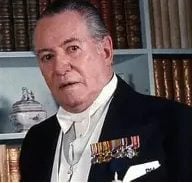
Dennis Yates Wheatley (1897-1977) was born in Brixton, south London, the son of a wine merchant. His best-known books were occult and supernatural thrillers, starting with The Devil Rides Out (1934); but from the beginning there were science fiction elements there too. Black August (1934) is about a future war, after which Britain is rescued from collapse by a palace coup. His large output includes other science fiction novels, such as They Found Atlantis (1936) (they found Atlantis), Sixty Days to Live (1939) (about the arrival of a destructive comet), and Star of Ill-Omen (1952) (which features flying saucers). A library of witchcraft and adventure. Dennis Wheatley, storyteller supreme, made a lifelong study of the occult. His meticulous research into the black arts reveals almost unbelievable sorcery. He warned. ‘By participating in Satanic Rites, however sham, one can make oneself a focus for Evil.’ No writer cared more about authenticity. This is true not only of his Satanist books, but also of his many other novels.
Wheatley was commissioned as a 2nd Lieutenant into the Royal Field Artillery during the First World War. Dennis was gassed in a chlorine attack during Passchendaele and was invalided out, having served in Flanders, on the Ypres Salient, and in France at Cambrai and Saint-Quentin. In 1919 he took over management of the family’s wine business. In 1931, however, after his father’s death, and with business having declined because of the Great Depression, he was financially over-extended, faced near bankruptcy, and was forced to sell his wine business. Knowing his love of telling tales, his wife suggested he write a book. DW wrote a detective novel called ‘Three Inquisitive People’ which introduced the Duke de Richleau and his friends and it was accepted for publication by Hutchinson, who were to be his publishers for the rest of his life. Before the book could be published he wrote a second book, an adventure story set in Russia and featuring the same set of heroes – ‘The Forbidden Territory’. Hutchinson decided this was a better novel and should be published first. He followed this with an ‘out of series’ novel which he wrote in a fortnight, and then went back to the writing of impeccably researched novels with ‘Black August’, which featured his second principal hero Gregory Sallust, and ‘The Fabulous Valley’. In 1934 he wrote an occult novel, ‘The Devil Rides Out’. Frequently rated as the best occult novel of the twentieth century, and it is his most famous work.
During the Second World War Wheatley was a member of the London Controlling Section, which secretly coordinated strategic military deception and cover plans. His literary talents led to his working with planning staffs for the War Office. He wrote numerous papers for them, including suggestions for dealing with a possible Nazi invasion of Britain (recounted in his works Stranger than Fiction and The Deception Planners). The most famous of his submissions to the Joint Planning Staff of the war cabinet was on “Total War”. He took part in the plans for the Normandy invasions.
After the War, Wheatley bought a mini country mansion in seaside Lymington in Hampshire, and he continued to write books, introducing a third principal character, Roger Brook, whose exploits took place in the Napoleonic era. He worked hard and to a well-disciplined routine. For around eight months of the year DW would devote himself to his writings. He would rise mid-morning and sometimes go to bed well after midnight, depending on how his writing was going. He took the remaining months off to go travelling, partly for pleasure and partly to research his next books. In the days when international travel was a distinct privilege, he went round the world twice, and used countries as diverse as Sri Lanka, Mexico and Egypt as backdrops for his books. During this time several of his books were filmed by Hammer, the most famous being ‘The Devil Rides Out’ with his friend Sir Christopher Lee playing the role of the Duke, a role which he enjoyed enormously.
Dennis Wheatley wrote sixty five books in all, with fifty six being novels and the remainder non-fiction. Eleven featured the Duke de Richleau, eleven Gregory Sallust, and twelve involved Roger Brook. Some nine of these are considered ‘Black Magic’ novels – a genre for which he is particularly famous.
By the nineteen sixties, Wheatley was selling over a million copies of his novels a year; his work was sold in around twenty nine countries and translated into over twenty eight languages, and altogether he is estimated to have sold something like fifty million copies of his books in his lifetime.
52 Volume Dennis Wheatley
He wrote with great intensity and created an amazing variety of characters and situations. The 52 volume Heron Edition of Wheatley’s novels, which includes his espionage and adventure stories, as well as the occult, is the only finely-bound edition in the world.
The craftsmanship is of the highest standard. Scarlet Kidron and lavish golden and black embellishing have been used to startling effect. The illustrations were specially commissioned from English artists.
Gift Suggestion – Why not put your own collection together? If you are interested in more than one book as a gift then please email me with your selections and I will confirm availability and give you a Special Price
Anthony Trollope (1815—1882) was an English novelist whose popular success concealed until long after his death the nature and extent of his literary merit. In his own time, Trollope’s novels were as popular with the common reader as they were admired by George Eliot, Henry James, George Bernard Shaw and Nathaniel Hawthorne. Today, he is probably the most widely read and loved nineteenth century English Novelists after Dickens and Jane Austen.
Anthony Trollope
Trollope grew up as the son of a sometime scholar, barrister, and failed gentleman farmer. He was unhappy at the great public schools of Winchester and Harrow. Adolescent awkwardness continued until well into his 20s. The years 1834–41 he spent miserably as a junior clerk in the General Post Office, but he was then transferred as a postal surveyor to Ireland, where he began to enjoy a social life. In 1844 he married Rose Heseltine, an Englishwoman, and set up house at Clonmel, in Tipperary. He then embarked upon a literary career that leaves a dominant impression of immense energy and versatility.
Among the best-known of his novels are two series of six novels each collectively known as the Chronicles of Barsetshire and the Palliser novels, as well as his longest novel, The Way We Live Now. His novels address political, social, and gender issues and other topical matters.
Barsetshire Chronicles
A series of books set in the imaginary English county of Barsetshire remains his best loved and most famous work, but he also wrote convincing novels of political life as well as studies that show great psychological penetration. One of his greatest strengths was a steady, consistent vision of the social structures of Victorian England, which he re-created in his books with unusual solidity. The Barsetshire novels excel in memorable characters, and they exude the atmosphere of the cathedral community and of the landed aristocracy.
Palliser Novels
Trollope’s other major series, the Palliser novels, which overlap with the Barsetshire novels, concerned itself with politics, with the wealthy, industrious Plantagenet Palliser (later Duke of Omnium) and his delightfully spontaneous, even richer wife Lady Glencora featured prominently. However, as with the Barsetshire series, many other well-developed characters populated each novel and in one, The Eustace Diamonds, the Pallisers play only a small role.
Trollope published four novels about Ireland. Two were written during the Great Famine, while the third deals with the famine as a theme (The Macdermots of Ballycloran, The Kellys and the O’Kellys, and Castle Richmond, respectively). The Macdermots of Ballycloran was written while he was staying in the village of Drumsna, County Leitrim. The Kellys and the O’Kellys (1848) is a humorous comparison of the romantic pursuits of the landed gentry (Francis O’Kelly, Lord Ballindine) and his Catholic tenant (Martin Kelly). Two short stories deal with Ireland (“The O’Conors of Castle Conor, County Mayo” and “Father Giles of Ballymoy” Some critics argue that these works seek to unify an Irish and British identity, instead of viewing the two as distinct. Even as an Englishman in Ireland, Trollope was still able to attain what he saw as essential to being an “Irish writer”: possessed, obsessed, and “mauled” by Ireland.
Trollope’s popularity and critical success diminished in his later years, but he continued to write prolifically, and some of his later novels have acquired a good reputation. In particular, critics, who concur that the book was not popular when published, generally acknowledge the sweeping satire The Way We Live Now (1875) as his masterpiece. In all, Trollope wrote 47 novels, 42 short stories, and five travel books, as well as nonfiction books titled Thackeray (1879) and Lord Palmerston (1882).
In 1859 Trollope moved back to London, resigning from the civil service in 1867 and unsuccessfully standing as a Liberal parliamentary candidate in 1868. Before then, however, he had produced some 18 novels apart from the Barsetshire group. He wrote mainly before breakfast at a fixed rate of 1,000 words an hour. Outstanding among works of that period were Orley Farm (serially, 1861–62; 1862), which made use of the traditional plot of a disputed will, and Can You Forgive Her? (serially, 1864–65; 1865), the first of his political novels, which introduced Plantagenet Palliser, later duke of Omnium, whose saga was to stretch over many volumes down to The Duke’s Children (serially, 1879–80; 1880), a subtle study of the dangers and difficulties of marriage. In the political novels Trollope is less concerned with political ideas than with the practical working of the system—with the mechanics of power.
Discover Trollope – A guide to Britain’s celebrated Victorian author.
Starting in 1989 The Folio Society began publishing the first complete edition of Trollope’s novels and continued at the rate of several per year until all 47 novels had been published.
This superb uniformly bound complete collection is generally available on my website together with the edition that was later produced by the Folio Society for the Trollope Society.
There are three major collected editions of the works of D H Lawrence.
The first of these is the The Works of D. H. Lawrence “Phoenix Edition” in 26 Volumes published by William Heinemann (1955-), London with the volumes uniformly bound in red cloth.
This 26 volume edition contains;
The White Peacock; The Trespasser; Sons and Lovers; The Rainbow; Women in Love; The Lost Girl; Aaron’s Rod; Kangaroo; The Plumed Serpent; First Lady Chatterley; Lady Chatterley’s Lover; Apocalypse; Twilight in Italy (Travel I); Sea and Sardinia (Travel II); Mornings in Mexico & Etruscan Places (Travel III); The Short Novels (2 volumes); The Complete Short Stories (3 volumes); The Complete Poems (3 Volumes); Phoenix: The posthumous papers of D.H.Lawrence (2 volumes); Boy in the Bush (Skinner, M.L., Lawrence, D. H.)
——————————————————————————————–
The second of these is The D H Lawrence Collection published in 24 volumes in the late 1970’s by Heron Books.
This 24 volume edition contains;
The White Peacock; Sons and Lovers; The Rainbow; Women in Love; The Lost Girl; Aaron’s Rod;
Kangaroo; The Plumed Serpent; Lady Chatterley’s Lover; Twilight in Italy, Sea and Sardinia;
Mornings in Mexico, Etruscan Places, The Trespasser (also seen as Short Novels III); Short Novels (2 volumes); Short Stories (3 volumes); Poems (2 volumes); Plays; Phoenix Part (2 volumes); Letters (2 volumes); Studies in Classic American Literature and Fantasia of the Unconscious.
——————————————————————————————–
The third of these is the scholarly edition of Lawrence´s works, The Cambridge Edition of the Works and Letters of D. H. Lawrence in 44 Volumes (36 Volumes Works + 8 Volumes Letters) Cambridge University Press, publication began in the 1980s.
This edition contains;
The White Peacock; Sons and Lovers; The Rainbow; The First Women in Love; Women in Love
The Lost Girl; Aaron’s Rod; Kangaroo; The Plumed Serpent; The First and Second Lady Chatterley Novels; Lady Chatterley’s Lover and A Propos of ‘Lady Chatterley’s Lover’;
Mornings in Mexico and Other Essays; Sea and Sardinia; Sketches of Etruscan Places and Other Italian Essays; Twilight in Italy and Other Essays; The Prussian Officer and Other stories; England, My England and Other Stories; St Mawr and Other Stories; Mr Noon
The Boy in the Bush; The Fox, The Captain’s Doll, The Ladybird; Reflections on the Death of a Porcupine and Other Essays; Love Among the Haystacks and Other Stories; The Trespasser; The Woman Who Rode Away and Other Stories; The Virgin and the Gipsy and Other Stories
The Vicar’s Garden and Other Stories; Paul Morel; Quetzalcoatl; Late Essays and Articles; The Poems (2 Volumes); The Plays; Introductions and Reviews
This website uses cookies to improve your experience. We'll assume you're ok with this, but you can opt-out if you wish.AcceptRejectRead More
Privacy & Cookies Policy
Privacy Overview
This website uses cookies to improve your experience while you navigate through the website. Out of these, the cookies that are categorized as necessary are stored on your browser as they are essential for the working of basic functionalities of the website. We also use third-party cookies that help us analyze and understand how you use this website. These cookies will be stored in your browser only with your consent. You also have the option to opt-out of these cookies. But opting out of some of these cookies may affect your browsing experience.
Necessary cookies are absolutely essential for the website to function properly. This category only includes cookies that ensures basic functionalities and security features of the website. These cookies do not store any personal information.
Any cookies that may not be particularly necessary for the website to function and is used specifically to collect user personal data via analytics, ads, other embedded contents are termed as non-necessary cookies. It is mandatory to procure user consent prior to running these cookies on your website.