
Agatha Christie
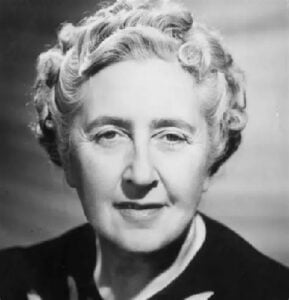
Agatha Christie, often hailed as the “Queen of Crime,” is one of the most prolific and celebrated authors in the world of mystery and detective fiction. Born in 1890 in Torquay, England, Christie wrote over 66 detective novels, 14 short story collections, and several plays, captivating readers with her keen insight into human nature and her intricate plots. Her works have been translated into over 100 languages and have sold billions of copies, cementing her as one of the best-selling authors of all time.
View books at Agatha Christie
Christie had long been a fan of detective novels, having enjoyed Wilkie Collins’s The Woman in White and The Moonstone, and Arthur Conan Doyle’s early Sherlock Holmes stories. She wrote her first detective novel, The Mysterious Affair at Styles, in 1916. It featured Hercule Poirot, a former Belgian police officer with “magnificent moustaches” and a head “exactly the shape of an egg”, who had taken refuge in Britain after Germany invaded Belgium. Christie’s inspiration for the character came from Belgian refugees living in Torquay, and the Belgian soldiers she helped to treat as a volunteer nurse during the First World War. In her autobiography Agatha reveals a regret about the character; she wished she had not made him a retired police officer as by the time the series of books in which he appeared has concluded his age in reality would have been well in excess of 100 years old.

Her first husband was Archibald Christie; they married in 1914 and had one child before divorcing in 1928. Following the breakdown of her marriage and the death of her mother in 1926, she made international headlines by going missing for eleven days. Christie disappeared from her home in Sunningdale on 3 December 1926. The following morning, her car, a Morris Cowley, was discovered at Newlands Corner in Surrey, parked above a chalk quarry with an expired driving licence and clothes inside. On 4 December, the day after she went missing, it is now known she had tea in London and visited Harrods department store where she marvelled at the spectacle of the store’s Christmas display. On 14 December 1926, she was located at the Swan Hydropathic Hotel in Harrogate, Yorkshire, 184 miles (296 km) north of her home in Sunningdale
During both world wars, she served in hospital dispensaries, acquiring a thorough knowledge of the poisons that featured in many of her novels, short stories, and plays. Following her marriage to archaeologist Max Mallowan in 1930, she spent several months each year on archaeological excavations in the Middle East and used her first-hand knowledge of this profession in her fiction. Despite her immense success, she was known for her modesty and reclusive nature, often shying away from the public eye.
Christie’s most famous characters, Hercule Poirot and Miss Marple, have become iconic figures in detective fiction. Poirot, the meticulous Belgian detective with his “little grey cells,” and Miss Marple, the sharp-witted amateur sleuth from the quiet village of St. Mary Mead, embody the contrast between methodical reasoning and intuitive insight. Through these characters, Christie explored complex themes such as justice, morality, and the darker aspects of human behaviour, all while maintaining a suspenseful and entertaining narrative.
Her writing style is known for its crisp dialogue, clever misdirection, and masterful plotting. Christie had a remarkable ability to create seemingly unsolvable mysteries that left readers guessing until the very end. Her works have inspired countless adaptations for film, television, and stage, ensuring her legacy endures in popular culture.
Whether you’re a seasoned fan or a newcomer to her work, reading Agatha Christie is always an invitation to solve the puzzle before the detective does, a challenge few can resist.
View books at Agatha Christie

